
He is a CFA charterholder as well as holding FINRA Series 7, 55 & 63 licenses. He currently researches and teaches economic sociology and the social studies of finance at the Hebrew University in Jerusalem. Josh from Company ABC is trying to determine the NCF of his business over the last month. Since the net income metric must be adjusted for non-cash charges and changes in working capital, we’ll add the $20 million in D&A and subtract the $10 in the change in NWC.
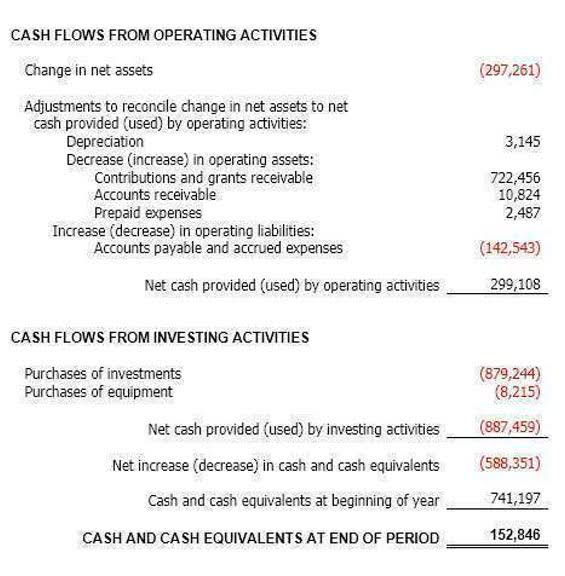
Whereas if more money went out, the result would be a negative cash flow. Along with being part of your cash flow statement, your adjusted asset totals are also reported on the non-current part of a balance sheet. In addition, the total income reported on your company’s income statement will also impact your cash flow statement. Investing activities refer to any transactions that directly affect long-term assets. This can include the purchase of a building, the sale of equipment, or investing in stocks.
Moving forward with net cash flow
A negative cash flow from investments may indicate that you’ve spent a significant amount of money on an investment that’s going to boost your revenues in the future. For example, while investing in new machinery or real estate may leave you in the red, you can expect to make your money back relatively quickly. Although net cash flow is an excellent barometer of financial health, it’s important to remember that some activities resulting in a positive cash flow may not be good for the business’s overall health. For example, your business may have received an injection of cash after taking on a new debt.

When calculating cash flow from investing, it’s just as important to understand what shouldn’t be included in your calculations. A negative cash flow does not mean a company is unable to pay all of its obligations; it just means that the amount of cash received for that period was insufficient to cover its obligations for that same time period. When companies keep detailed cash inflow and outflow records, it’s easier for them to see what’s working and what isn’t. The more data that’s available to you, the easier it will be for you to create financial projects and create a growth strategy for your business that’s healthy and sustainable. Financial institutions are much more interested in your net cash flow than your net income because the former provides a wider and more nuanced picture of your business’s overall financial health.
All types of cash flow formulas explained
For example, if you were to buy a property for $100,000, you should charge at least $1000 in monthly rent to cover the cost of your investment. In this sense, the 1% rule is a calculation that can help you determine whether a potential investment is going to provide you with steady cash flow. The management of cash and cash flow is important as it can prevent a business from failing. Cash flow is the way that money moves in and out of a business and its bank accounts. Since there are many different cash flow formulas, you may be wondering which one is the most important.
- Cash flow is the way that money moves in and out of a business and its bank accounts.
- If this business were to combine all three sections, it would be difficult to determine how well the core operations were performing or if operating cash flow was positive or negative.
- If the number you get is positive after subtracting cash outflow from cash inflow, you have positive cash flow.
- When a business has a surplus of cash after paying all its operating costs, it is said to have a positive cash flow.
- If it is done in an old-fashioned way, it can be very time-consuming, and generate stress for the manager who does not have enough visibility to run the business with complete peace of mind.
- The plethora of different concepts and formulas can be daunting at first.
However, it doesn’t always show an accurate picture of your company’s financial status. Net cash flow helps you determine the solvency, working capital, and management efficiency of your business, while net income determines only your net cash flow formula end profits. Net cash flow is the difference between your cash inflow (the money going into a business) and cash outflow (the money leaving it). Sometimes, we have to calculate net cash flow of a company for a specific period.